The Gods Return Home: Inside the Diplomatic Campaign Restoring Nepal’s Stolen Sacred Art
In the traditional courtyards of Patan and Pharping, sculptures of deities are not inert decorative antiquities; they are living gods—bathed every morning in holy water, adorned with vermilion powder and marigold garlands, and visited by neighborhood elders before sunrise.
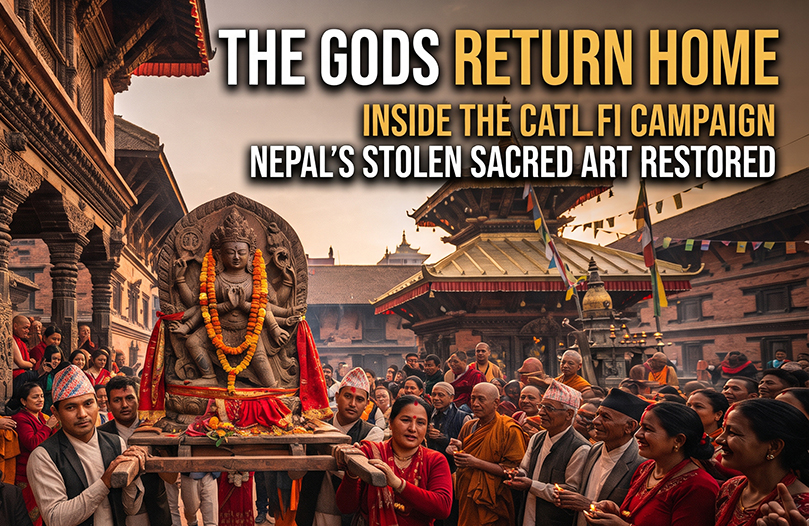
When hundreds of these sacred figures were ripped from temple niches during the international art looting wave of the 1970s and 1980s, communities felt an acute spiritual void. This week, that historical wound took a major step toward healing as five 12th-century Licchavi and early Malla-era masterpieces touched down in Kathmandu following voluntary repatriations by French and American institutions.
The Power of Archival Sleuthing
The restitution breakthroughs are the result of tireless detective work spearheaded by the volunteer citizen sleuths of the Nepal Heritage Recovery Campaign. By cross-referencing black-and-white archival photographs taken by art historian Jürgen Schick in the 1970s with contemporary auction house catalogs and museum holdings, activists presented incontrovertible proof of theft.
“In Western museums, these sculptures were labeled as anonymous ‘Himalayan art objects’ mounted on velvet pedestals,” said heritage advocates in Lalitpur. “Here, they have names, birthplaces, festivals, and caretakers who remember the exact night they were stolen.”
Rebirth in the Shrine, Not the Glass Case
What distinguishes Nepal’s restitution movement is the ultimate destination of the returned gods. While many nations transfer returned antiquities into climate-controlled national vaults, local guthi trusts in the Kathmandu Valley are restoring them directly into their consecrated shrines.
Fortified with subtle modern vibration sensors, solar-powered CCTV cameras, and reinforced iron grilles, the deities are regaining their rightful place at the center of community devotional life—a living testament to cultural resilience.