Yamari Punhi & Matinaya Paru (Newari Valentine Day)
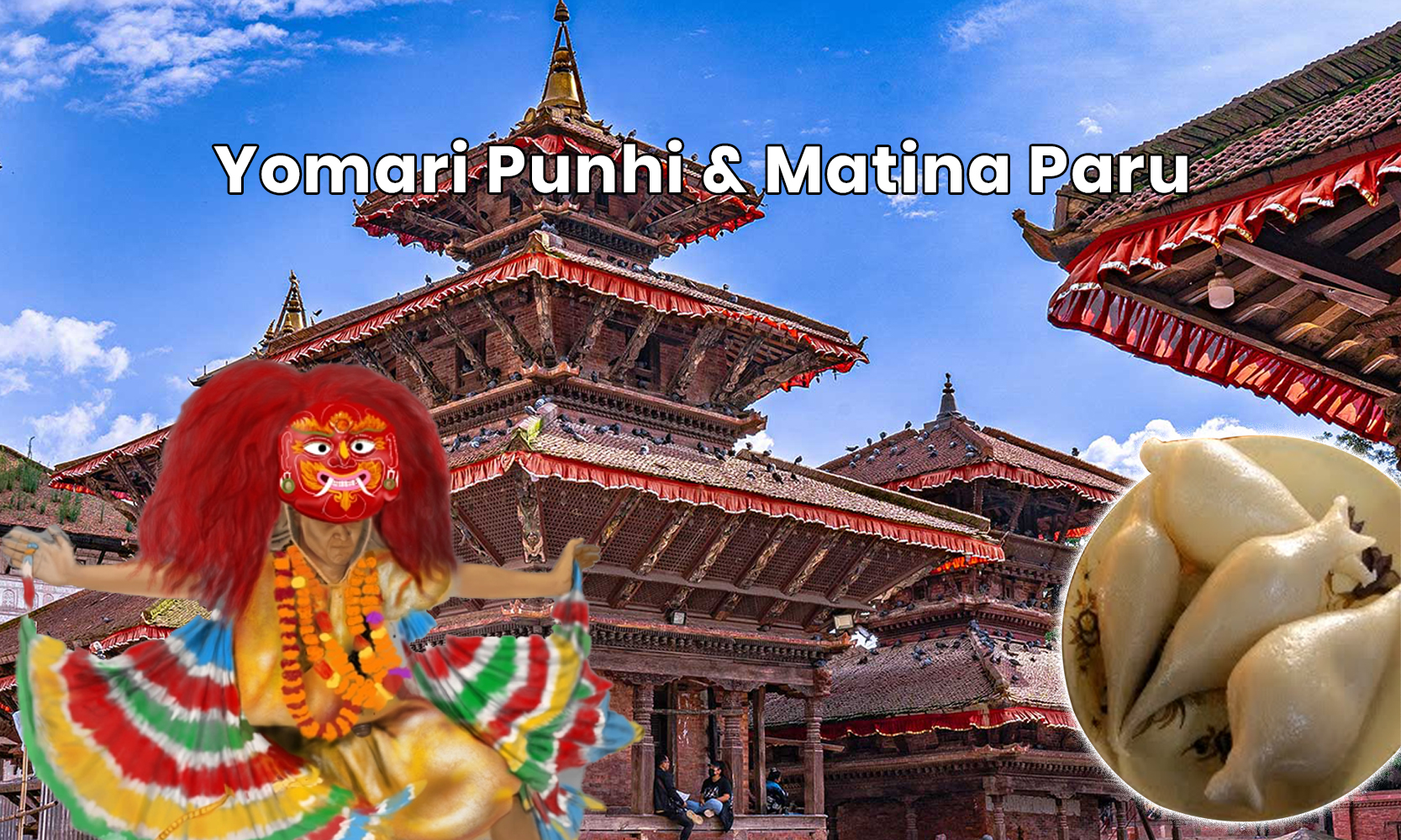
Observed in full moon day of December, Yamari Punhi is a Newari festival. A popular Newari delicay “Yamari” is cooked and eaten this day. The name “Yamari” comes from two Nepal Bhasa words, “Ya:” meaning “to like” and “Mari” meaning “delicacy/bread”. So, “Yamari” literally means a popular (liked) delicacy.
The festival is believed to have started from the city of Panauti (Panchal Nagar). It is said Suchandra and Krita, a married couple from Panauti, first experimented with fresh yield of rice from their field. They came out with shape of the popular delicat “Yamari”. They then distributed the new delicay among the villagers. Liked by all, the bread was named “Yamari”, which literally means ‘tasty bread’. The couple offered “Yamari” to lord Kuber (god of weath) who was disguised and passing by. Kuber became very happy and disclosing himself blessed the couple with wealth. He also declared that whosoever prepare Yamari in the form of gods and goddesses on the full moon day of Marga Sukla Purnima (December) every year and observe four days of devotion to god, will gain wealth and prosperity.
There is also a tradition of making garland of yamari and putting to 2, 4, 6, 8, 10 and 12 years old kids on their birthday by their mothers in the Newar community.
Yamari Punhi is observed during very cold days. It is said eating of yamari takes away cold. It is also believed that longer the tail of yamari, shorter the winter will be. Youth and children visit house to house asking for Yomari singing local Newari Songs and popular lores.
Matina Paaru
Celebrated on the next day of the “Yomari Punhi”, “Matina Paaru”(Newari Valentine day) is being celebrated since centuries, matina means love and Paaru meand pratipada. According to the Newari community, love proposal of this day will turn out to be a permanent & successful love story/retaltionship.
According to popular myth, Majipa Lakhey (the demon care taker of Katmandu) fell in love with a beautiful girl from Majipat. Back then, Majipat referred to Manjupatan or Manjushree city (Present-day Kathmandu Valley). The beautiful girl was the single daughter of the sick parents who had to go to the farm all alone for agriculture. One day, The Majipa Lakhey saw her on the banks of river farming and instantly fell in love with her. The demon then started to take a form of a human and meet the girl. He used to help the girl in the farming. The girl also fell in love with him. Majipa Lakhey went to propose to her parents for the marriage. Upon being questioned about the detail, her parents figured out that the person is a Lakhey. The parents were horrified and told him to leave before they would call others to capture him. The Lakhey refused to leave and said he truly loves her and wants to marry her. He would rather die if he cannot marry her. The girl also said that she also truly loves him and would die if she cannot marry him. The parents were horrified and called other villagers. The villagers knowing that the person is Lakhey captured it and presented him to the King.
The Lakhey pleaded to the King to allow him to reside in the city with his lover and promised that he wouldn’t harm anyone. The king questioned him, “What will you eat if you don’t kill us?” The Lakhey answered that he would just eat meat and eggs. Originally, the Lakhey was not named until this point, so the king named him LAKHEY (in the Newari language, la means meat, and khey means egg).
The King also made the proposal that he will allow him to live in the city with his lover if he vows to protect the children from other demons.Majipa Lakhey agreed and then started to live in the city with the people and his lover. But people were afraid that he might eat them. So, they sent a child to check if Lakhey would harm him or not. The child went slowly to Lakhey and teased him. The Lakhey didn’t harm him but instead teased him back by chasing him away. The boy was scared at first but upon realizing that Lakhey won’t harm him, he went again to tease him. Again, Lakhey teased him back by running after him. The boy was enjoying this and kept doing the same, the Lakhey was irritated and kicked the boy three times and left him. The popular “Jyalincha” is the representation of the same boy, during Indrajatra.
Seeing Lakhey not harming the child, People started to trust Majipa Lakhey and even invited him to participate in the annual festival of Yenha Punhi ( Indra Jatra). This is how true love between a demon and a young girl made the demon worshipped among the gods.