Mahabir Pun authorised to revive Krishi Aujar Karkhana
The National Innovation Centre (NIC), led by Mahabir Pun, has been authorised by the government to revive Krishi Aujar Karkhana, a government–owned agricultural tool factory. The Ministry of Finance signed an agreement with the NIC on September 27, which will give the centre responsibility to operate the facility for the next ten years. Krishi Aujar Karkhana is arguably the first and only agricultural tool factory in Nepal to have been inoperative for the past two decades.
The factory was established in Birgunj on February 28, 1967, with assistance from the Soviet Union, and was inaugurated by King Mahendra on June 8, 1966. It extends across 3.39 hectares of land and includes a showroom building, a security building, a workshop for water pump manufacturing, administrative quarters, a guest house, and quarters for high–level staff. The factory was initially successful, producing hand sickles, hoes, spades, threshers, pump sets, ploughs, tillers, threshers, pump sets, steel trailers, garbage containers, electric poles, suspension bridges, drinking water and sewage management tools. Government organizations like Nepal Airline Corporation, Nepal Telecom, Nepal Electricity Authority, Dairy Development Corporation etc. also bought their necessary equipment from the factory.
However, the government‘s lack of introducing the right policies to support the factory, combined with the smuggling of tools from India, caused the factory to operate at a loss. It was subsequently privatised in 1997, with 65% of the shares sold to the private sector. This only resulted in more difficulties, as the operators were unable to pay salaries or allowances to their employees and the facility was eventually closed down. On November 14, 2001, the Nepalese government decided to operate the factory again, yet the necessary capital was not released by the Ministry on time. Finally, a cabinet meeting on March 18, 2003, decided the factory should be shut down once more.
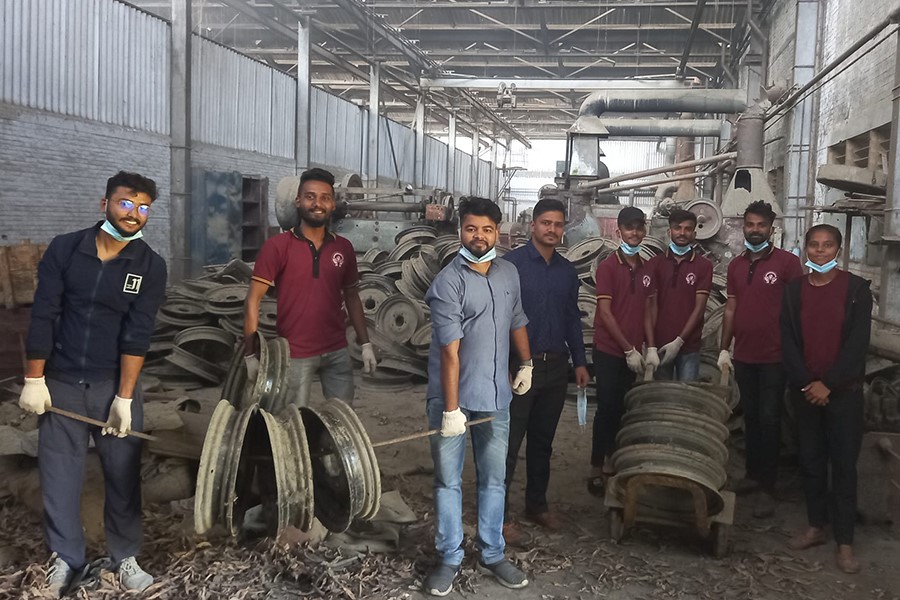
The National Innovation Centre team of technicians visited the site and discovered 43 of the 54 machines could still be operated. The team also began to clean the factory and prepare the material. Mahabir Pun, the NIC chairman, has announced plans to mordenize the factory. He explained that due to the machinery being sixty years old, some of it needs to be upgraded, while some is still usable. The centre plans to produce 10–15 new agricultural tools within a year of resumption, and to bring the factory back to its full capacity within two or three years.